In my inspiration post, I stated that I required answers on a few questions before my design progress could really move forward. To answer those questions, my wife and I booked a room at Riad Al Bartal in Fez, Morocco during Thanksgiving in 2016. The questions and the answers below are based upon our singular experience. We plan to stay in another similar structure in the summer (Southern Spain, May 2017) to get a feel for the opposite seasonal effects.
- Question: What are the measurements of a riad for each room? Based on those measurements, what is the overall geometry of the house and intersections?
- Answer: 3.5m x 10m, with length dimension proportional to the courtyard.
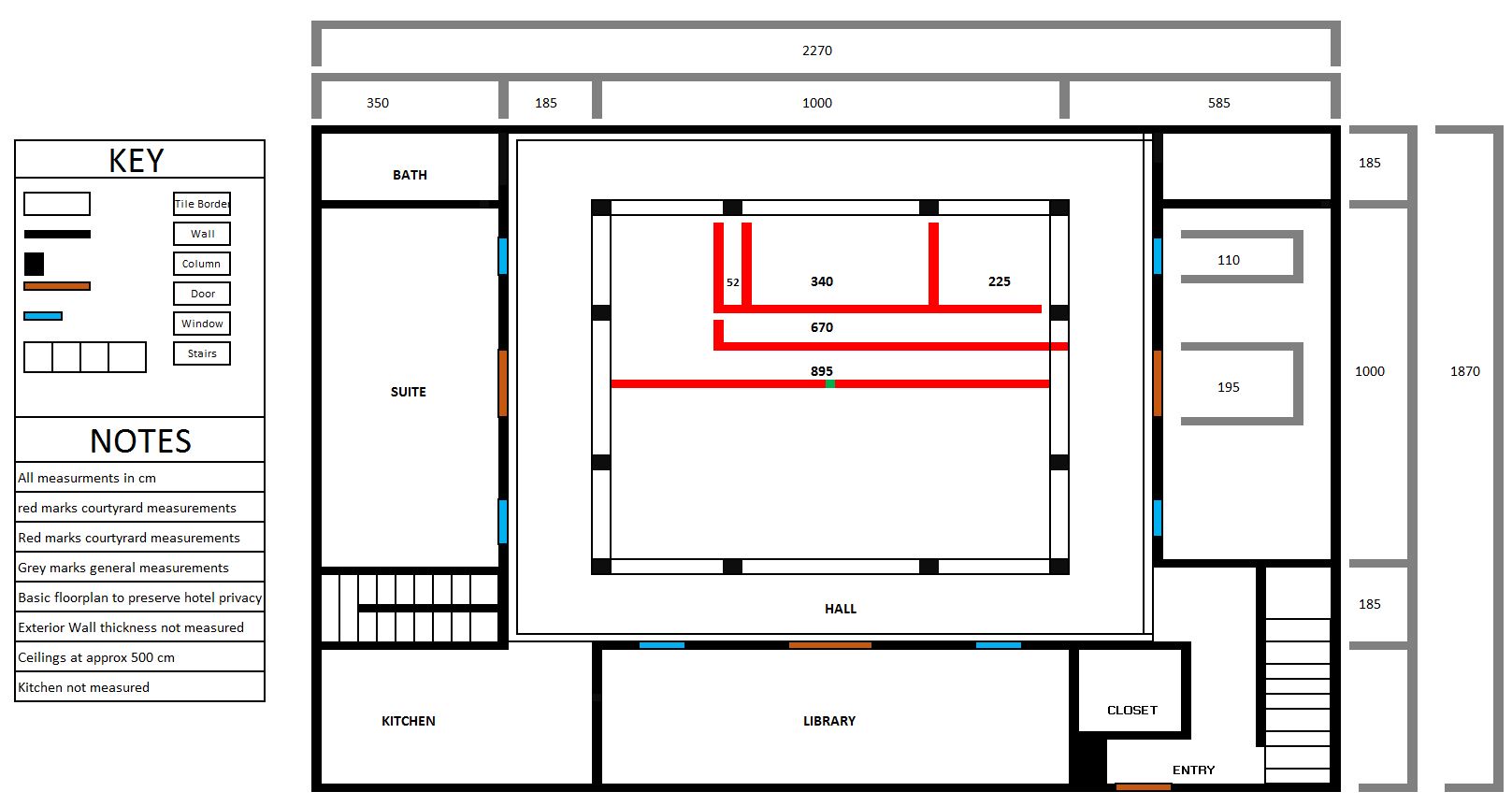
For the particular riad we stayed in, the room measured 3.5m x 10m. The bathroom measured 3.5m x 1.85m. The only windows in either room were interior ones, facing to the enclosed atrium courtyard. The suite altogether matched the length of the courtyard, which was the central balance I would imagine for a master suite, and a central dividing point for additional rooms, etc.
The depth measurement is the most important though, which was 3.5 meters (11.5 ft) – more than adequate considering the length of the room. The suite’s square footage was 35m sq. (377 FT sq). One could easily shrink the sleeping area to create wardrobes that attach to a master bath, using a 5 meter or 7 meter courtyard as your guide.
- Question: What is the climate/micro environment of the riad? (This data must be average or somehow reconciled with the environment where we are building the house back in the US)
- Answer: Climate is approximately 10 degrees F warmer with no detectable humidity issues (in winter), while the retractable roof poses a sound a wind risk. Exterior windows are needed to create constant air flow. Requires follow on stay in similar building during the summer months.
The weather during our stay had lows of 35 degrees F and highs of 60 degrees F (I don’t do Celsius for temp…Fahrenheit is just so much better) with a few rainy nights. The riad had several large plants (in excess of 20), limited external windows (2 on ground floor), and retractable roof structure.
Despite the rain, the plants, and limited air flow, the humidity was not high. I did not however have an actual device to measure, I just went off of feeling. There was no condensation on the tile in the atrium aside from what originated from the roof enclosure. The same applied for the rooms we stayed in.
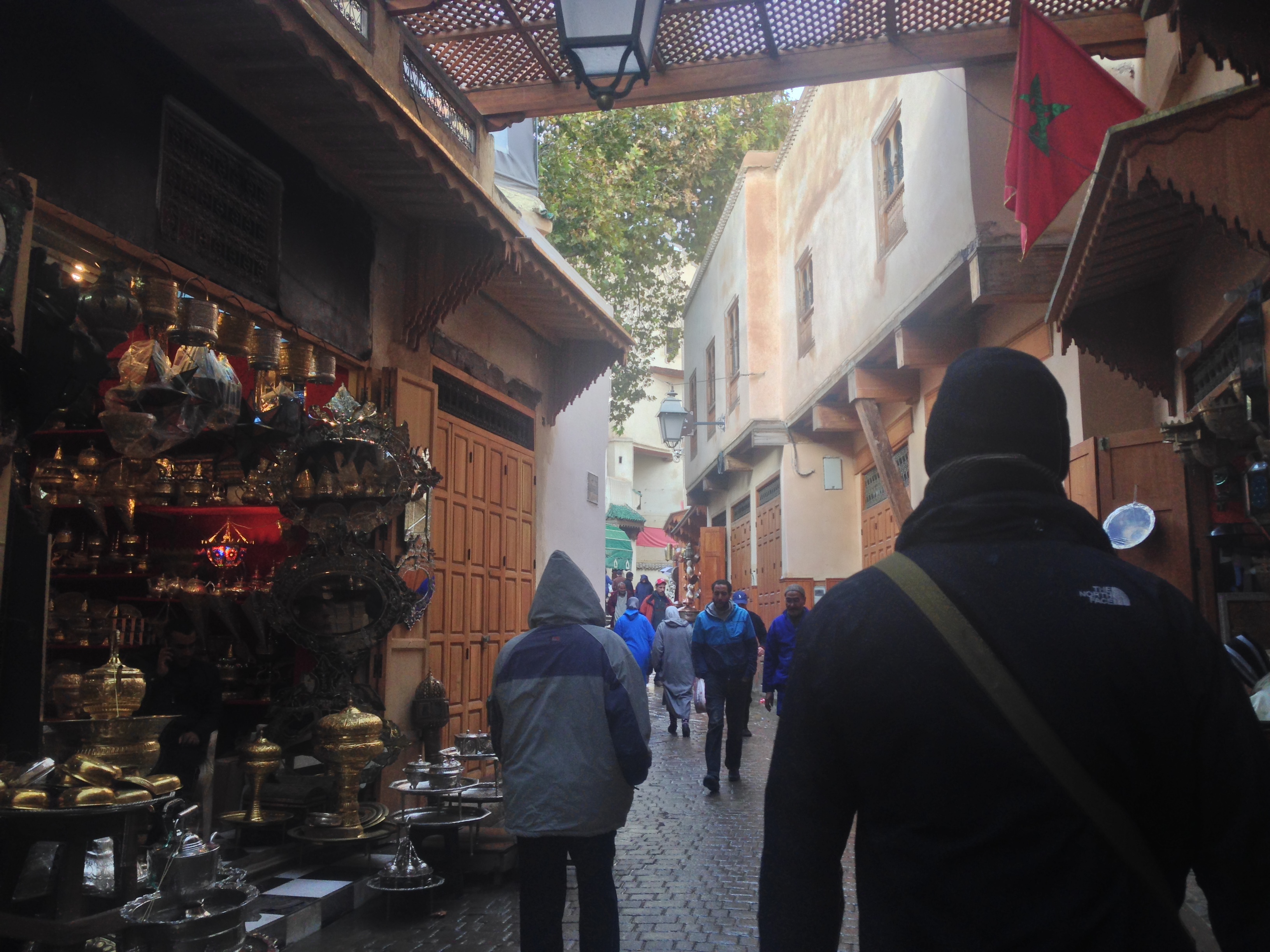
When it was 35 and windy outside, it was maybe 40-45 inside without the use of any heaters. The kitchen was also on the first floor, which provides some collateral heat. The riad used space heaters which worked marvelously, and if I can find an electric version, I will totally use those to save on heating costs.
In the cold, wet, winter you need to either vent the kitchen fully into the middle of the house, or the atrium, which may cause smell issues. Or, one must have by-level controlled central heat/AC that is supported by space heaters. I would personally try to aim for a winter temp of 60-70, using space heaters as the primary source of heat. This could also be a case for installed warming coils in the floors (ground floor at least) to use en mass as an advantage. Our current home in Germany is heated through the floors and it is fantastic.
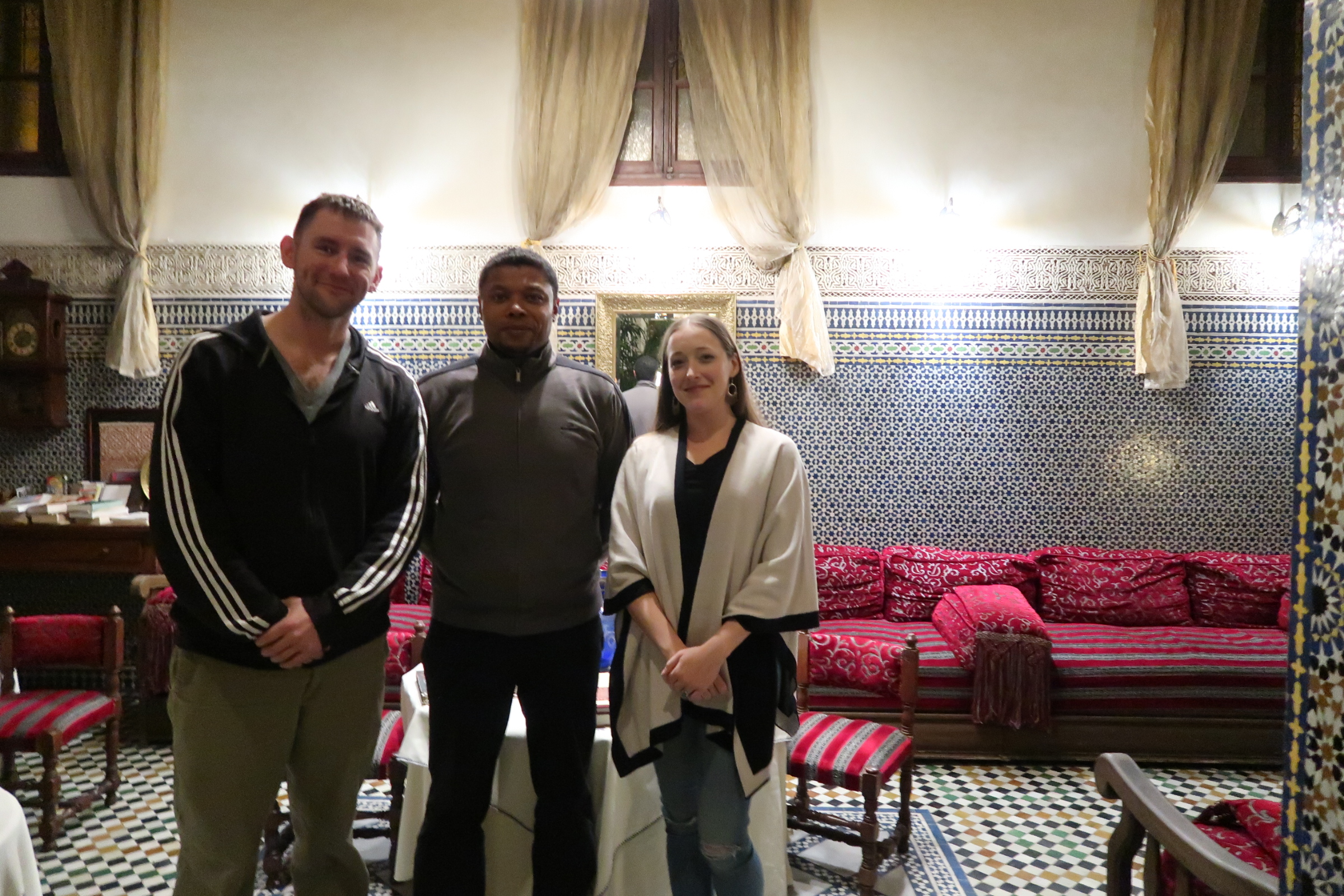
Our amazing host, Omar, gave me some great environmental information for the atrium at Riad Al Bartal, where we were staying. The enclosure does work, and I think sounds good in a normal rain storm. However, an U.S. hail/wind/tornadic storm will turn it into a set of drums, or rip the roof off of the house. The hotel had an issue with an older atrium cover being ripped off during a storm because it was not sealed all the way.
In Oklahoma, a storm can appear within 20 minutes. If we are not home when one hits, we could be returning to find the enclosure gone…or on top of my neighbor’s car/dog/cat. So, to save money and grief, I might be changing the design to use a series of venting and non-venting skylights that have rolladens or similar covering capability. A retractable roof runs $85-$100 per square foot, which is a massive line item expense. On another note, cigarette smoke diffuses pretty well in the courtyard area, while kitchen smells diffuse into 1st floor rooms easily.
- Question: What does the tile and decoration ‘feel’ like? Is it too busy?
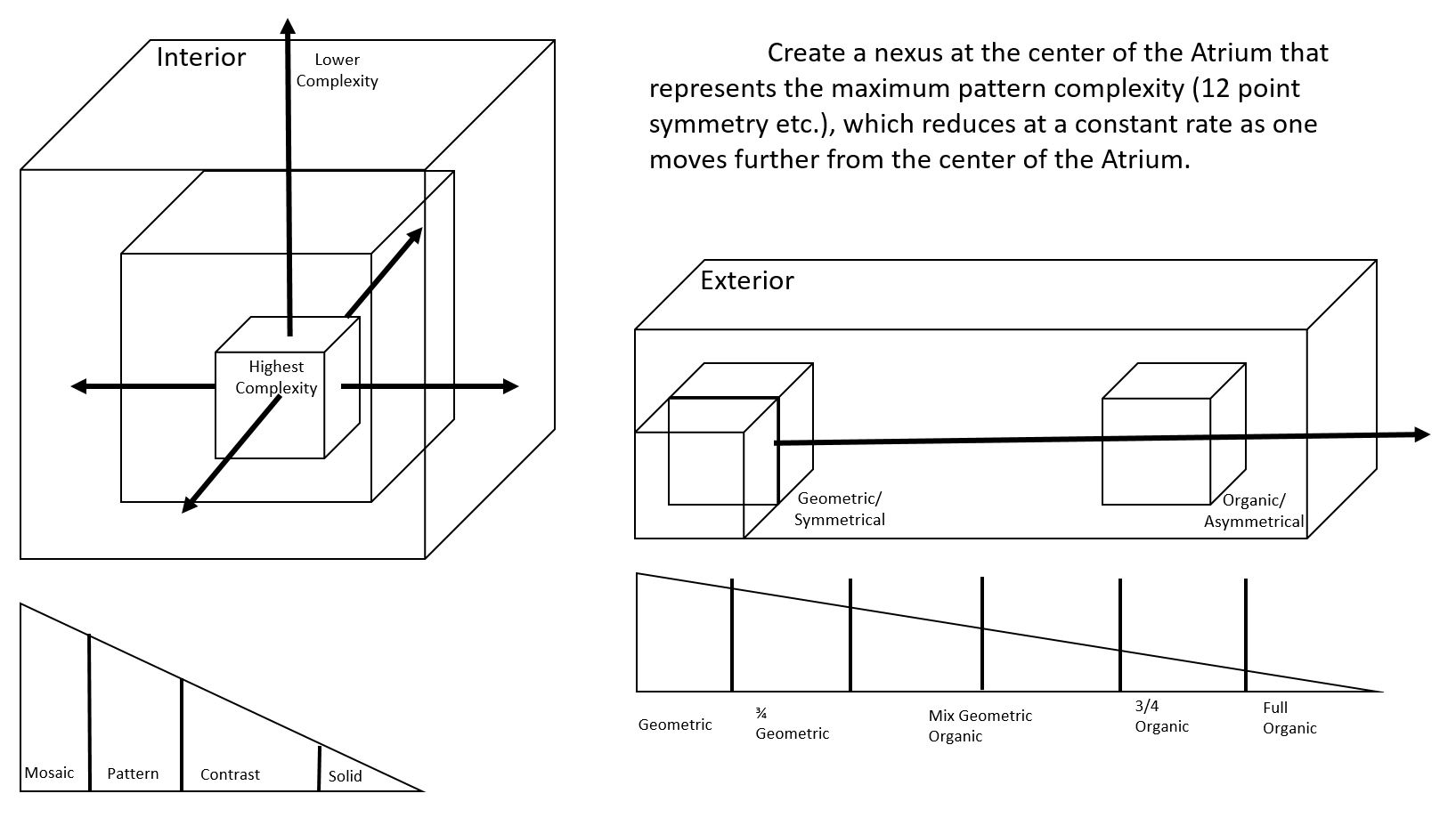
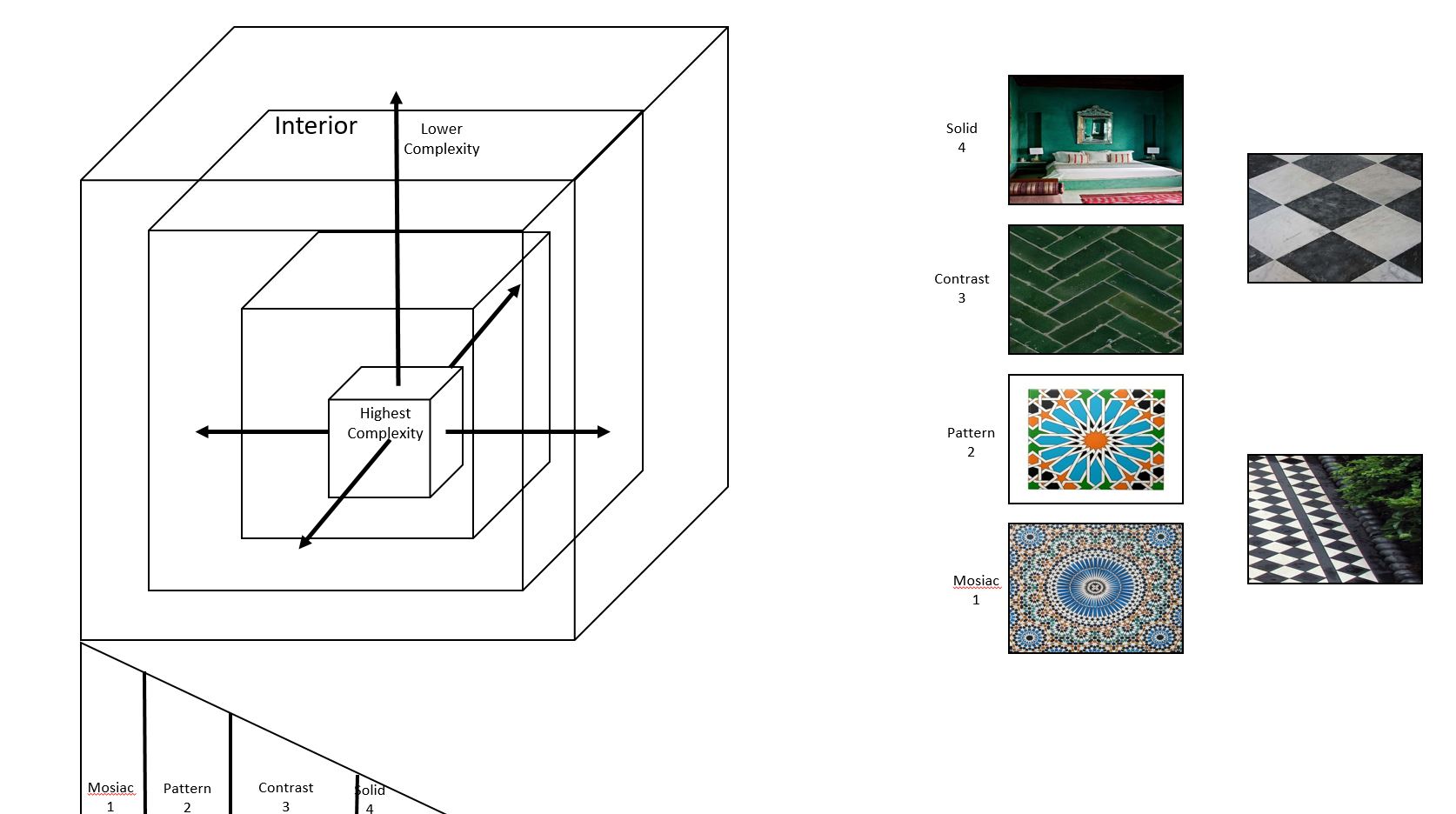
- Answer: In my opinion, the complexity should decrease the further from the center you get, so that exterior walls have maybe 25% of the décor of the interior columns. If you go too crazy, you may give yourself OCD when you turn 70.


We had lunch at Dar Saada, which was especially busy with the fractal geometry carved plaster. It was stunning. But when you added the peachy-pastel pink color painted on all the main walls (not shown) and turquoise accents, that made the enclosure feel overwhelmed. We want the intricate, ornate details – that’s what makes riads so beautiful – but they need to be balanced, unified, and harmonious.
I think limited stress on a modern sensibility can be achieved by:
- Limiting the molded plaster to crown molding and upper column décor
- Simplifying the wood work into simple geometric shapes/or contrasting patterns
- Limiting tile wainscoting to maybe 1.2m height, or reduce height as you get further from the center
- Using furniture with solid colors/no pattens
- Ensure the 2nd floor is drastically simplified using solid colors (mostly white) and contrast (Inspiration: Moorish minimalism)
- Stop using zellige/mosaic at room thresholds
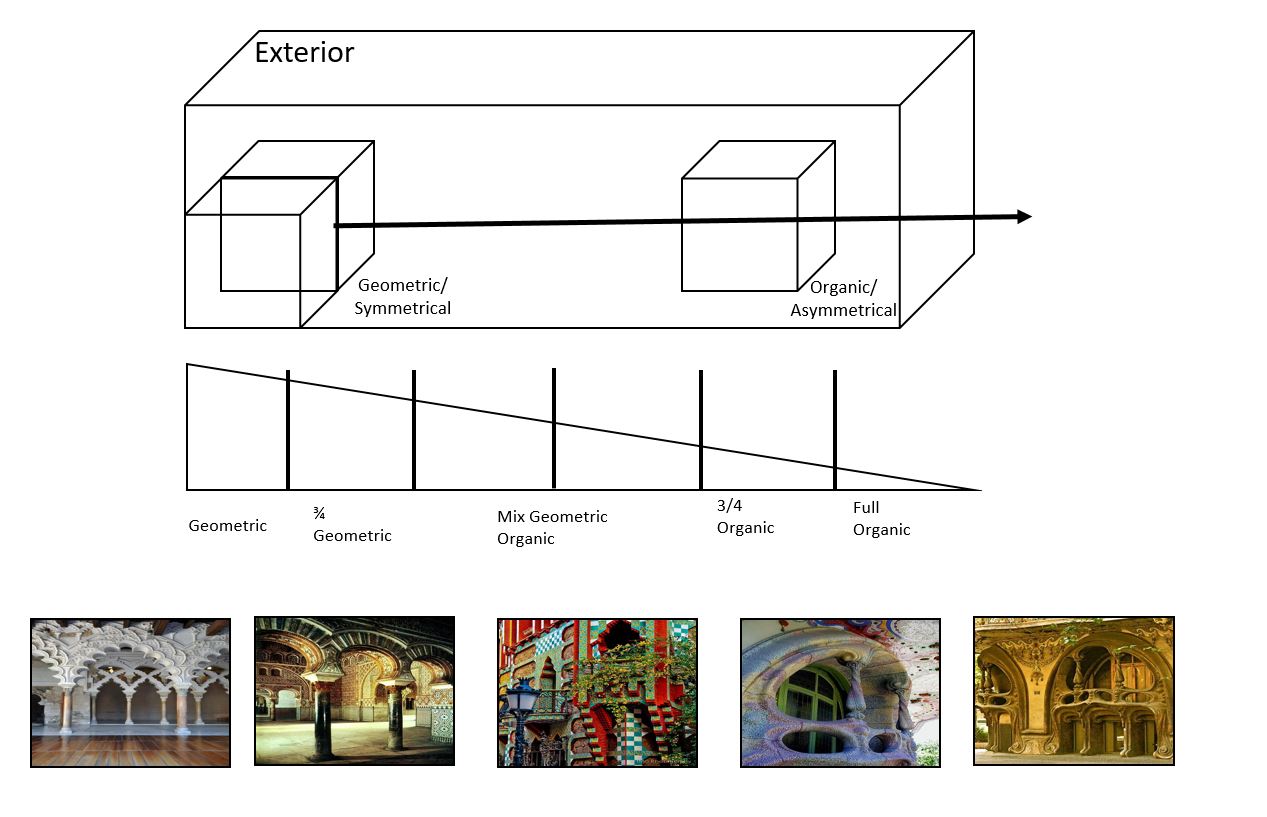
I made a general design concept diagram a few weeks ago that captures my idea of reducing complexity as you leave the center. This current concept incorporates Gaudi’s natural world inspiration as a method to reduce symmetry and order, so everything becomes more organic by the time you’re in the backyard. This is also a good way to have a design that I can do at home and totally screw it up and still claim it followed my master plan…
- Question: How does light penetrate the structure from the atrium?
- Answer: Very well considering the lack of external windows.


During the day the natural sunlight (even when cloudy) was diffused across the riad via the white walls. You may still need a small reading light if you set up a nook, but if you set up a library, I recommend exterior windows and overhead lighting. I made a simple light diagram to show how lamps and ceiling lights were dispersed.
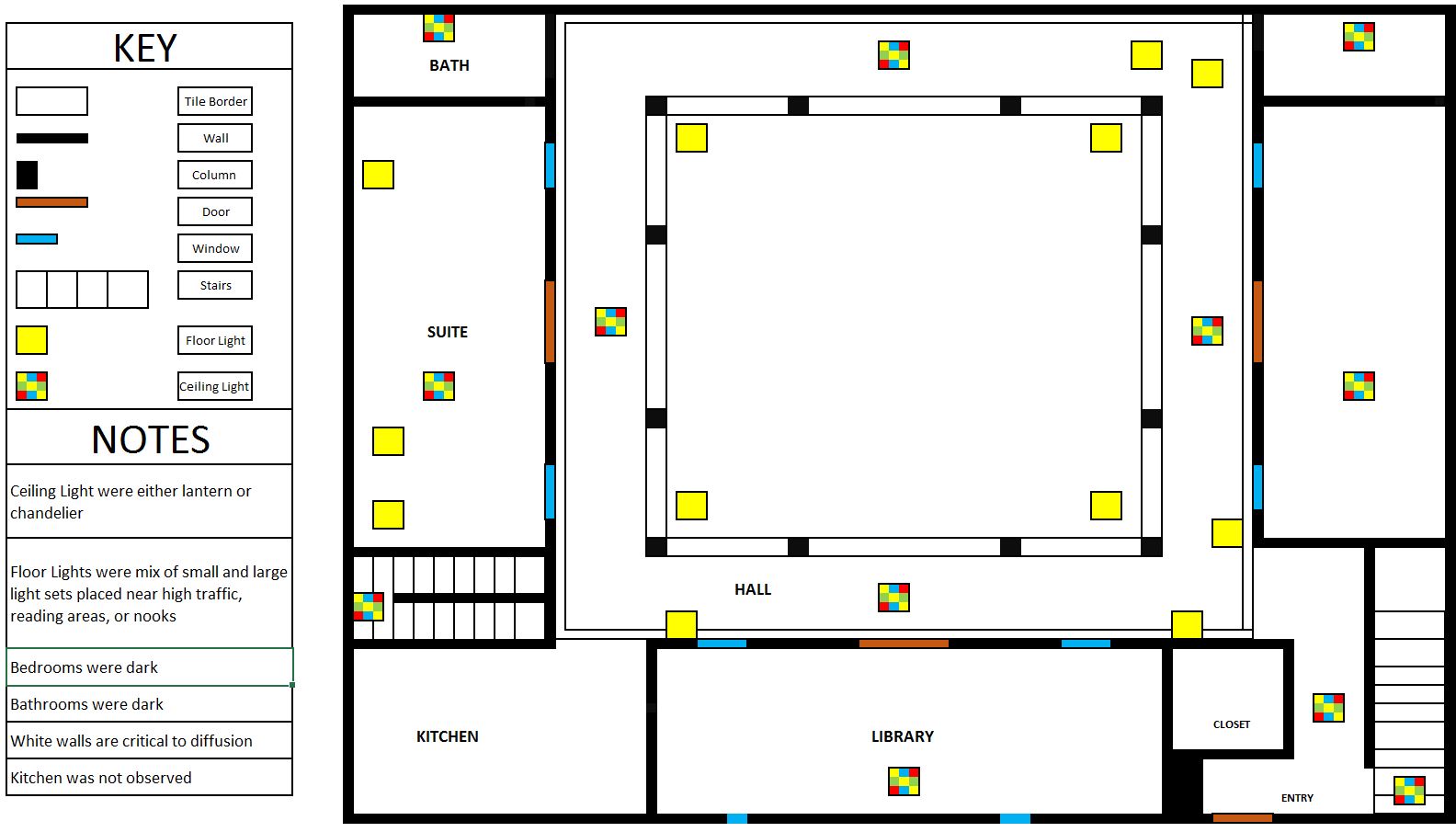
If you build the rooms to U.S. Codes and use white paint, along with modern lighting, everything should feel balanced.
- Question: What is night like in the Riad?
- Answer: It’s very dark. Use recessed lighting, small and large lamps, and spot lights to highlight certain areas. Dimmers for all!
 The riad is dark at night, with light from lamps only where absolutely needed | Riad Al Bartal
 The low light of the riad at night was perfect for our dinners | Riad Al Bartal
 The seating nook just off the atrium glows at night from a few lamps | Riad Al Bartal
 Another view of the night lighting, on the floor | Riad Al Bartal


- Question: How does sound propagate?
- Answer: Sound moves unimpeded throughout the house. Great for music. Omar recommended we do what they do – use heavy drapes to absorb sound in each room. More research is needed. If we can stay in a riad with more than 4 guests that should help us find out more on this subject.
Sounds really travels in the riad, but this is true of any house with no carpet and an open floor plan. So this makes setting up an entertainment system easy, but it also makes hosting large gatherings a pain as the voices might eventually start sounding like a mad-man’s nightmare. I think this can be mitigated by ensuing drape hook attach points are built into columns to you can insert hooks/rods or something, so you can hang drapes in key areas around the atrium to absorb sound. For normal everyday family time, it’s not a problem if the walls are thick (concrete is the plan anyways) and if you use modern windows. I would also make sure interior windows have drapes inside the rooms as a fallback.
So, I feel like my wife and I found out a lot about riads, and we think it is possible to build one. In addition to the answers above, we also think after our stay at Riad Al Bartal that the central courtyard should be between 5 x 5 and 10 x 10 meters. Right now 7 x 7 meters works really well floorplan-wise. If you have specific questions or recommendations, shoot me an email and I will try to get an answer back in a reasonable time-frame.
-Mike
 Project Riad