Several months prior to our trip I began to develop a budget to control and forecast cost, and a prioritized shopping list that indicates a price objective for each item. To see cost estimates for lanterns and rugs, check out the post on Shopping in the Fez Medina.
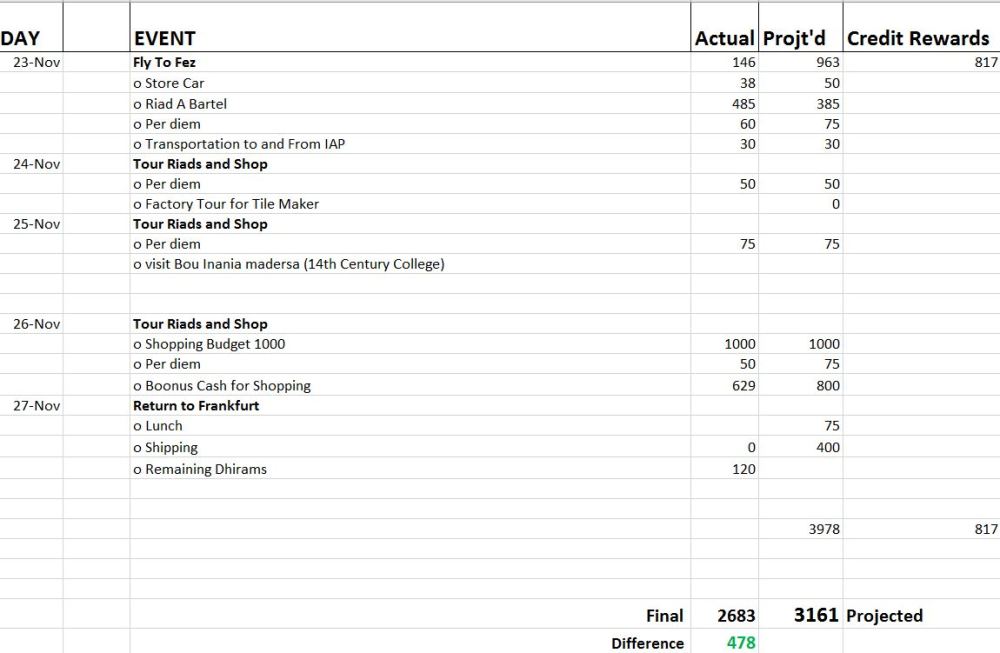
Flights/Hotel/Parking: Certain costs are clear and easy to predict, such as flights, hotels etc. If you book your hotel through an online vendor, you may end up paying the local tourist tax once you settle your hotel bill locally. The tax runs about 25 dhirams per person per day, or roughly $2.50 depending on the exchange rate. Don’t forget to account for parking/storage fees.
Flights To Fez: Direct flights are available to Fez, which are routed through Casablanca. RyanAir has cheap flights into Morocco and is worth a look. For the record, I used Chase’s travel rewards program to cash in some points. If you have time and you are feeling adventurous, you can fly into Tangier and then take the train, but it will cost you a day. I recommend flying straight in, just to avoid some hassle. You can also take the ferry across from Spain, but again, you will have to take a train which will cost you a day and generate a little extra hassle.
A word of warning: the Casablanca domestic flight terminal is basically a giant cube with one coffee counter and empty fountain – bring a book.
Transportation: Prior to traveling, I recommend identifying exactly how you are going to move around the city. Will you use trains, metros, cabs, buses? This could turn into a massive hidden cost if not planned correctly. If you understand the transportation system you can save a lot of time and money. My wife and I ignored the metro in Barcelona which would have saved us a ton of time trying to get to key spots, and we ended paying 100 Euros for a late-night cab between Naples and Pompeii one night. Most hotels can help you coordinate transportation from the airport.
If you are staying in the Medina, all you need is transportation from the airport to your hotel, which takes about 30 minutes and costs 150 dhiram each way. Once inside the Medina, everything is by foot, so plan and shop accordingly so you aren’t struggling with 40 kilos of merchandise for 2 Km.
If you are staying outside the Medina in a newer hotel, you can take a cab to the gates. I recommend taking a cab to the Bab Boujloud, also known as the Blue Gate, which is odd since it is green. This gate is very close to two of the main shopping avenues of Taala Kebira and Taala Sghira. The local cabs are known as ‘Petite Cabs.’ If you plan on traveling between cities, you will be a ‘Grand Cab’ and may be sharing the space with others if you are not willing to buy out all of the seats.


Per diem: costs can be more difficult to factor, but can easily get out of control. I recommend estimating your per day costs of water, food, incidentals etc and then factor that into the daily cost of the trip. For Fez, I set a per diem rate of $75 for my wife and me. Once we settled our hotel bill (we ate dinner there every night) we ended up just below our budgeted amount. Meals in the Medina average 200-300 dhirams if you go all out, but you can eat for much much cheaper.
Shipping: Prior to traveling and buying anything, you must figure out how you are getting it home. There is a post office on the western side of the Medina close to the Blue Gate and many rug vendors have accounts with DHL. 20KG (including the box/frame) costs about 700 dhiram to ship to Europe.
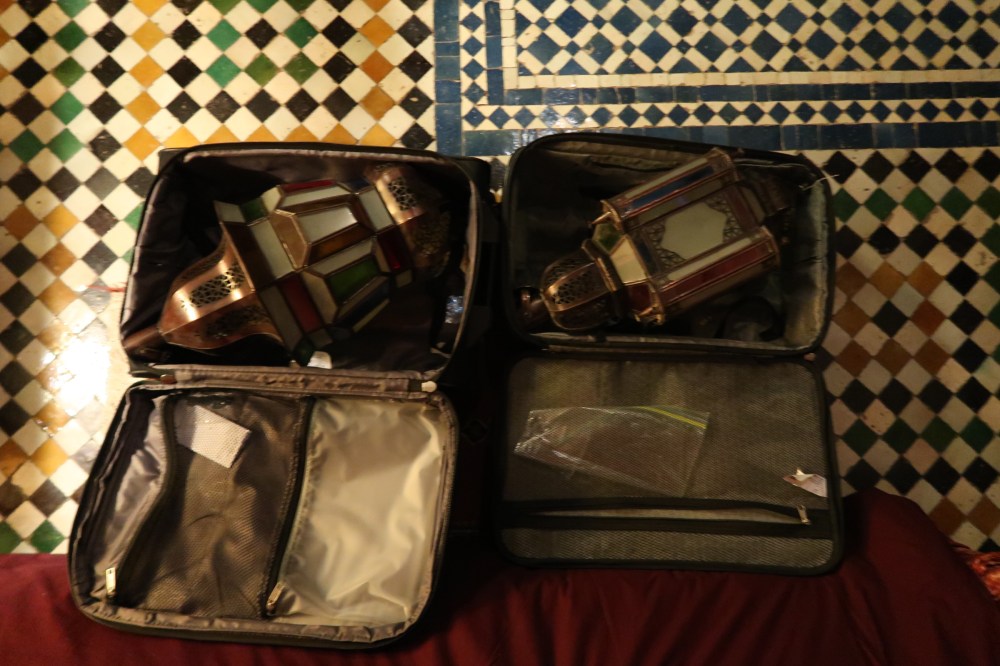
We traveled very light so we could bring back as much as possible in checked and carry-on luggage. We each checked our largest luggage, which was empty, and packed what we needed into our carry-ons. That way, there was room to bring things home with us. If this isn’t an option, factor an entire morning or afternoon to go to the post office and ship everything out in bulk. Make sure you can translate some French or better yet, be able to speak it.
US Citizens that ship goods to the United States are not subject to customs duties, but if you are an expat not covered by a Status of Forces Agreement or Diplomatic Immunity, then expect to cough up 20% VAT to the EU.
When shipping, try to get the Airbill and tracking number from the vendor prior to leaving the country if possible. This will provide peace of mind and help work the customs portion. If not, request that they email it to you when it is ready (this is what we did and it worked out for us). If you fail to pick up your items in a timely manner, the customs yard may end up destroying your shipment of lanterns and argan oil…
Shopping: Prior to traveling I scoured the internet to learn what Morocco was known for, and then find relative prices for those items. I used a variety of websites, but Pinterest and Tripadvisor were the most helpful. There are several other travel-wikis, blogs, and websites that talk prices. Check out the shopping post to get more info on how I approached this issue. Set a limit and stick to it! Again, if you want more detail check out shopping in the Medina to get some info on prices, bartering, etc. Rachel will be posting soon about an experience with a tannery vendor that didn’t go so well because he wasn’t willing to bargain – it happens.
Overall, we came in just under our projections. Our spending was not exactly to plan, but we had a guide to keep on path and we knew our limit. If you go into the Medina without a plan, you could easily spend $600 and have no idea why you bought it or how you are getting it home.
-Mike
 Project Riad